


The Timeless Edit
Vintage Joseph Inwald Art Deco Float Bowl with Dancing Lady - Amber Glass 1930s
A Museum-Quality Masterpiece from Bohemian Glass Royalty
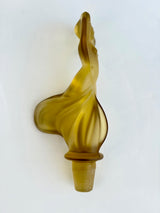
This extraordinary three-piece centrepiece represents the pinnacle of Art Deco glass artistry. Created by the prestigious Joseph Inwald Glassworks circa 1930s in Bohemia (now Czech Republic), this complete set comprises a magnificent amber float bowl, original flower frog, and the pièce de résistance—a frosted glass "Dancing Lady" figurine captured mid-pirouette in an elegant pose that epitomizes the grace and glamour of the era.
About This Exceptional Piece
Joseph Inwald Glassworks was among the most celebrated glass manufacturers in Bohemia, renowned for producing sophisticated decorative glass that graced the finest homes across Europe. During the 1930s, float bowls with figurines became the ultimate status symbol—displayed in parlours, on entrance tables, and as centrepieces at elegant gatherings. These pieces represented the intersection of art and function, serving as both sculptural objects and practical vessels for dramatic floral displays.
The Dancing Lady figurine—with her flowing gown and graceful movement frozen in frosted glass—embodies the Art Deco fascination with movement, modernity, and feminine elegance. The warm amber bowl provides a stunning backdrop, creating beautiful light effects when displayed near windows or illuminated from below.
Finding a complete original set in this condition is exceptionally rare. Most sets have been separated over the decades, with figurines lost or bowls damaged. This pristine ensemble is a serious collector's piece that would be equally at home in a museum vitrine or a contemporary living space.
Product Details
Maker: Joseph Inwald Glassworks
Origin: Bohemia (now Czech Republic)
Era: Circa 1930s
Style: Art Deco
Material: Pressed and moulded glass
Colour: Warm amber bowl with frosted clear Dancing Lady figurine
Set includes: Float bowl + original flower frog + Dancing Lady figurine (complete 3-piece set)
Dimensions: 29cm diameter × 27cm height (assembled)
Weight: 2465g (substantial and museum-quality)
Condition
Excellent vintage condition—looks as new. Exceptionally rare to find a complete set in such immaculate condition after nine decades. No chips, cracks, or restoration. All three original pieces intact. A testament to careful preservation and the superior quality of Inwald craftsmanship.
Care Instructions
Hand wash only with mild soap and warm water. Avoid harsh or abrasive cleaners and high heat. Not dishwasher safe. Dry immediately with a soft, lint-free cloth to prevent water spots and maintain the glass's brilliant clarity. Handle the Dancing Lady figurine with care.
Perfect For
Serious Depression glass and Art Deco collectors seeking museum-quality pieces. Perfect as an investment piece that appreciates in value while bringing daily beauty to your home. Display empty as a sculptural statement on a console table, sideboard, or illuminated shelf where the Dancing Lady can be admired from all angles. Or use as originally intended—fill the bowl with water and the flower frog with a dramatic floral arrangement for special occasions. The amber glass creates a warm glow that enhances both modern minimalist and vintage-inspired interiors.
This is the kind of piece that becomes a family heirloom, a conversation starter, and a tangible connection to the artistry and elegance of 1930s European design.
A rare and complete masterpiece that brings the sophistication of Bohemian glass-making, the glamour of Art Deco design, and the enduring beauty of functional art to discerning collectors and contemporary homes alike.
Age of an Item
Antique: An item that is at least 100 years old.
Vintage: An item that is at least 20 years old but less than 100 years old and is representative of its era.
Retro: A newer item designed in the style of a past era. It is not from that era but is a modern homage to it.
Condition of an Item
Mint: As new, with no signs of wear.
Excellent Vintage Condition (EVC): Shows minimal signs of wear through use but is not perfect.
Very Good Vintage Condition (VGVC): Shows some signs of age and use but is still in good overall shape.
Good Vintage Condition (GVC): Shows clear signs of wear, use, and age.
Perfectly Imperfect: This is not an official term. We've adopted it for the purposes of The Timeless Edit because we believe damaged items still have value. Our definition of Perfectly Imperfect is an item that has visible damage but remains beautiful as a decorative piece or suitable for use in a different capacity from that for which it was originally designed.
Common Flaws Found in Antique and Vintage Items
Air Bubbles: Air bubbles in hand-blown glass are a natural result of the traditional glassmaking process, where air becomes trapped in the molten glass during its creation. They are often seen as a sign of authenticity, indicating the item is handmade and unique, rather than a defect. While a small number of bubbles is generally acceptable, a high concentration of bubbles may indicate fragility. In some cases, air bubbles are an intentional decorative feature. Air bubbles are also found in Depression Glass due to its mass production method, where glass was quickly moulded with little concern for perfection — these bubbles are a common characteristic that signifies authentic pieces.
Bottom Wear: Common in older items, especially glass, and often an indication of age. Wear to the base of an item is caused by everyday use over time and includes scratches, scuffs, shallow chips, flakes, and flea bites.
Chip: Chips are considered either shallow or deep. A shallow chip is typically inconspicuous. A deep chip is large enough to be immediately apparent.
Crazing: Crazing is a web of fine cracks that occurs only in the glaze layer of fine bone china and porcelain. It is a normal occurrence, particularly in older items.
- Clean Crazing: The cracks are clear, without any staining from food, moisture, or other contaminants. Clean crazing can be used as an intentional decorative design element.
- Stained Crazing: This occurs when food particles, bacteria, or other contaminants get into the cracks over time, causing them to darken and become visually conspicuous. Items with stained crazing are not recommended for use with food but are still suitable as decorative pieces.
Firing Flaw: An original flaw caused during the firing process. Examples include pinholes or blisters in the glaze, grit stuck to the glaze, stains caused by an impurity in the porcelain, and shrinkage cracks that have opened during the drying or firing process. This is not considered damage.
Flake: A small and shallow chip which breaks the surface of an item.
Flea Bite: A tiny, pin-sized chip or nick in the surface of an item. It is a common form of imperfection in older items, especially glass.
Hairline Crack: A narrow and tight break going through the glaze and porcelain body, visible from both sides of the item. It is not always immediately obvious and can be missed on first inspection. Generally, a hairline crack does not affect the integrity of the item.
Maker's Miss: An unintentional inclusion or air bubble in the item caused or overlooked by the glassblower or maker during the manufacturing process.
Scratch: A mark which compromises the surface of an item and which feels raised, rough, or sharp to the touch. Not to be confused with Straw Marks and marks which can occur during the manufacturing process.
Straw Marks: Marks on the external surface of glass that look like fine lines or even scratches. They occur when molten glass is cut with shears and the resulting mark doesn't fully smooth out before the glass cools and sets. They are not considered damage but are instead a common characteristic of old, handmade, or machine-pressed glass. Unlike a scratch, straw marks feel smooth to the touch. Straw marks are commonly found in Depression and Carnival Glass.
Water Mark / Stain: Patches, ridges, deposits, and clouding on glass caused by water left standing in the vessel for a lengthy period. Such stains cannot be removed.
Materials and Techniques
Backstamp: The maker's mark printed or impressed on the base of a ceramic or glass item. Backstamps typically include the manufacturer's name, country of origin, pattern name, and sometimes a date code. They are the primary tool for authenticating and dating vintage pieces, and their design often evolved over a maker's history, allowing collectors to pinpoint when a piece was produced.
Bone China: A type of porcelain developed in England in the late eighteenth century, distinguished by the inclusion of bone ash (calcined animal bone) in the clay body. Bone ash gives bone china its characteristic creamy translucency, warmth, and exceptional strength relative to its delicacy. When held to the light, genuine bone china glows. It is the material of choice for the great English china makers — Royal Albert, Royal Doulton, Shelley, Coalport, and many others.
Gilding / Gold Trim: The application of gold to the surface of ceramic or glass as a decorative finish. On vintage pieces, gilding was typically applied using real gold — most commonly 22-carat gold — either by hand or by transfer, then fired to fuse it permanently to the surface. The quality and condition of gilding is an important factor in assessing a piece; worn or rubbed gilding is a common sign of heavy use.
Hand-painted vs Transfer Print: Hand-painted decoration is applied directly to the ceramic surface by an artist, making each piece subtly unique. Transfer printing involves applying a pre-printed design to the surface, allowing for consistent, repeatable patterns at scale. Many pieces combine both techniques — a transfer-printed ground with hand-painted highlights or gilding added over the top. Both methods are found across the great ceramics houses and each has its own collectible appeal.
Iridescence / Carnival Glass: An iridescent surface effect on glass, achieved by spraying metallic salts onto the surface of hot glass before it cools. The result is a lustrous, rainbow-like sheen that shifts colour in different lights. Carnival Glass — so named because it was commonly given as prizes at fairgrounds in the early twentieth century — is the most widely collected form of iridescent glass, produced in the United States, England, and Australia from around 1908 onwards.
Opalescent Glass: Glass that appears milky or translucent white in direct light but takes on a blue or lavender glow when backlit. The effect is achieved by adding bone ash or other opacifying agents to the glass batch. Opalescent glass is closely associated with the Art Nouveau movement and is a signature technique of René Lalique, whose pieces are among the most sought-after examples of the form.
Porcelain: A ceramic material fired at very high temperatures, resulting in a hard, dense, non-porous body. Unlike bone china, traditional porcelain does not contain bone ash. Hard-paste porcelain — the original European formula, developed in the early eighteenth century — is the material of Meissen, Sèvres, and Royal Copenhagen. Soft-paste porcelain, an earlier European approximation, has a slightly different texture and translucency. Both are distinct from bone china, though all three are commonly referred to as "china" in everyday use.
The Legacy of Joseph Inwald Glassworks
Joseph Inwald Glassworks stands as one of the most significant names in Bohemian glass history. For over a century, this prestigious company created decorative glass that graced elegant homes across Europe, producing pieces that were both beautiful enough to collect and practical enough to use every day—a philosophy that makes Inwald glass as relevant today as it was nearly a century ago.
A Bohemian Glass Dynasty
Founded in the mid-19th century in Bohemia (now the Czech Republic), Joseph Inwald Glassworks built its reputation on exceptional quality and innovative design. The company operated during the golden age of Bohemian glass-making, when the region's artisans were considered the finest in Europe.
By the early 20th century, Inwald had grown into one of the largest and most respected glass manufacturers in Central Europe, with multiple factories producing everything from utilitarian pressed glass to sophisticated decorative pieces. The company's success lay in its ability to combine artistic excellence with practical functionality—creating objects of beauty that enhanced everyday life.
The Art Deco Era: Inwald's Golden Age
The 1920s and 1930s marked the pinnacle of Joseph Inwald's creative output. During the Art Deco period, the company produced some of its most celebrated and collectible designs, perfectly capturing the era's fascination with geometric forms, streamlined elegance, and modern glamour.
Signature Designs
Float Bowls with Figurines: Perhaps Inwald's most iconic creations, these three-piece sets combined a large glass bowl, a flower frog insert, and an elegant figurine—often a dancing lady, nymph, or classical figure. These pieces epitomized Art Deco sophistication and became status symbols in fashionable homes across Europe.
Dancing Lady Series: The frosted glass figurines of graceful women in flowing gowns captured the Art Deco celebration of movement, modernity, and feminine beauty. Each figurine was carefully designed to balance artistry with stability, creating a sculptural element that elevated the float bowl from functional object to work of art.
Coloured Glass Collections: Inwald excelled at producing vibrant coloured glass in amber, pink, green, and blue. These warm, jewel-like tones added visual interest and created beautiful light effects when displayed near windows or artificial lighting.
Geometric Patterns: Clean lines, stepped forms, and precise geometric cuts reflected the Art Deco aesthetic while showcasing the technical skill of Bohemian glass-makers.
Quality That Endures
What sets Joseph Inwald glass apart—and what makes it so collectible today—is the exceptional quality of both materials and craftsmanship. Inwald pieces were made to last, using high-quality glass formulations and precise manufacturing techniques that have allowed them to survive decades of use in remarkable condition.
The weight and clarity of Inwald glass, the precision of moulded details, and the durability of the material all speak to a level of quality that's increasingly rare. These weren't disposable objects—they were investments in beauty and functionality designed to be used, enjoyed, and passed down through generations.
Why Inwald Glass is Highly Collectible
Historical Significance: Inwald pieces represent an important chapter in European decorative arts, capturing the elegance and optimism of the Art Deco era.
Rarity of Complete Sets: Float bowl sets with original figurines and flower frogs are exceptionally rare. Most have been separated over the decades, making complete sets highly sought after by collectors.
Artistic Merit: The Dancing Lady figurines and other Inwald designs are recognized as legitimate works of decorative art, not merely functional objects.
Superior Craftsmanship: The quality of Bohemian glass-making is evident in every piece, from the clarity of the glass to the precision of moulded details.
Investment Potential: As awareness of Inwald's significance grows and complete sets become scarcer, values continue to appreciate, particularly for pieces in excellent condition.
Still Beautiful, Still Usable
Here's what makes Joseph Inwald glass truly special: these pieces aren't just museum artifacts to be locked away. They were designed for use, and they're still wonderfully functional today.
In Contemporary Homes
Timeless Aesthetics: Art Deco design never truly goes out of style. The clean lines, geometric forms, and elegant proportions of Inwald pieces complement both vintage-inspired and modern minimalist interiors.
Versatile Display: Float bowls work beautifully as sculptural accents displayed empty, or filled with seasonal flowers, floating candles, or decorative spheres. The Dancing Lady figurines are conversation pieces that add personality and artistry to any space.
Functional Beauty: These pieces were made to be used. The glass is durable, the flower frogs still work perfectly for arranging stems, and the bowls are ideal for dramatic floral displays at dinner parties or special occasions.
Sustainable Luxury: Choosing vintage Inwald glass is an environmentally conscious decision. These pieces have already proven their longevity, and by using them, you're participating in the circular economy while enjoying superior craftsmanship.
Emotional Connection: There's something deeply satisfying about using beautiful objects in daily life. An Inwald piece on your table isn't just decoration—it's a tangible connection to history, artistry, and the generations who valued beauty in everyday moments.
Identifying Joseph Inwald Glass
Inwald pieces can be challenging to identify, as many were unmarked or bore only paper labels that have been lost over time. Collectors typically identify Inwald glass through:
- Characteristic design elements, particularly the Dancing Lady and other figurine styles
- Quality of glass and precision of moulding
- Comparison with documented examples in reference books and museum collections
- Provenance and attribution from reputable dealers
- Distinctive colour palettes, particularly the warm amber tones
Collecting and Using Inwald Glass
When acquiring Joseph Inwald pieces:
- Prioritize complete sets: Float bowls with original figurines and flower frogs are far more valuable and desirable than separated pieces
- Condition matters: Look for pieces without chips, cracks, or restoration, as condition significantly impacts both value and usability
- Buy what you love: The best pieces are those that speak to you personally and that you'll actually display and enjoy
- Don't be afraid to use them: These pieces were made to be functional. With proper care, they'll continue to serve beautifully for generations to come
Caring for Your Inwald Glass
Hand wash with mild soap and warm water, avoiding harsh detergents and abrasive cleaners. Dry immediately with a soft cloth to prevent water spots. Handle figurines with care, supporting them from the base. Store carefully when not in use, wrapping pieces individually to prevent contact damage.
The Inwald Philosophy: Beauty in Use
Joseph Inwald Glassworks understood something fundamental: beautiful objects enhance our lives most when we actually use them. These pieces weren't created to sit in storage or behind glass—they were designed to be part of daily rituals, special celebrations, and ordinary moments made extraordinary by beauty.
That philosophy remains as relevant today as it was in the 1930s. An Inwald float bowl filled with garden roses, a Dancing Lady figurine catching afternoon light on a windowsill, a coloured glass bowl holding fresh fruit on a kitchen counter—these aren't just decorative choices. They're affirmations that beauty matters, that craftsmanship has value, and that the objects we surround ourselves with shape our experience of home.
Joseph Inwald glass proves that the best collectibles aren't those we lock away, but those we live with—pieces that bring daily joy while appreciating in both monetary and sentimental value over time.


