


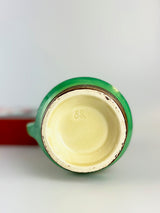
A striking example of 1930s Art Deco design, this hand-painted drip-glaze pitcher showcases the bold colour palette and organic forms that defined the era. The dramatic combination of yellow, green, and brown glazes creates a mesmerizing cascade effect, with each colour flowing naturally into the next – a hallmark of the drip-glaze technique.
The matte finish and distinctive glaze work are characteristic of Wade Heath's celebrated Flaxman Ware line from the 1930s. The elegant form and artistic glazing make this piece as beautiful to display as it is functional, embodying the Art Deco movement's marriage of artistry and utility.
Why You'll Love It:
- Highly collectible 1930s Wade Heath Flaxman Ware
- Stunning hand-painted drip-glaze in bold Art Deco colours
- Perfect as a statement vase for fresh or dried flowers
- Beautiful displayed solo as decorative art on shelves or mantels
- Versatile styling – elevates vintage, Art Deco, or eclectic interiors
- Supports the circular economy by giving this beautiful piece continued life
The Story:
Wade Heath was a prominent English pottery manufacturer known for their innovative glazing techniques and Art Deco designs during the 1930s. The Flaxman Ware line, distinguished by its matte finish and artistic drip-glaze effects, represents some of Wade Heath's most collectible work from this period. Model number 88 is stamped on the base, making this a documented piece for collectors.
The drip-glaze technique required considerable skill – artisans would apply multiple coloured glazes that would flow and blend during firing, creating unique patterns on each piece. No two drip-glaze pieces are exactly alike, making each one truly one-of-a-kind. This pitcher embodies the optimism and artistic experimentation of the Art Deco era, when British potteries were creating world-class decorative ceramics.
Condition:
Excellent vintage condition with honest wear consistent with age. Clean crazing on the inside, to be expected with pieces from this era and a testament to nearly nine decades of history. The hand-painted glaze remains vibrant and intact. No chips, cracks, or restoration.
Dimensions & Details:
- Maker: Wade Heath (England)
- Line: Flaxman Ware
- Model: 88
- Era: 1930s
- Style: Art Deco Drip Glaze
- Height: 18cm
- Diameter at opening: 11cm
- Weight: 461g
Care:
Hand wash only using mild detergent and lukewarm water. Avoid abrasive cleaners that could damage the matte finish. Do not soak the pitcher for extended periods. Dry immediately after washing to preserve the vintage ceramic.
One-of-a-kind piece. Once it's gone, it's gone.
Age of an Item
Antique: An item that is at least 100 years old.
Vintage: An item that is at least 20 years old but less than 100 years old and is representative of its era.
Retro: A newer item designed in the style of a past era. It is not from that era but is a modern homage to it.
Condition of an Item
Mint: As new, with no signs of wear.
Excellent Vintage Condition (EVC): Shows minimal signs of wear through use but is not perfect.
Very Good Vintage Condition (VGVC): Shows some signs of age and use but is still in good overall shape.
Good Vintage Condition (GVC): Shows clear signs of wear, use, and age.
Perfectly Imperfect: This is not an official term. We've adopted it for the purposes of The Timeless Edit because we believe damaged items still have value. Our definition of Perfectly Imperfect is if an item has visible damage but remains beautiful as a decorative piece or suitable for use in a different capacity from that for which it was originally designed.
Common Flaws found in Antique and Vintage Items
Crazing: Crazing is the existence of web of fine cracks that only occurs in the glaze layer of Fine Bone China and porcelain. It is a normal occurrence, particularly in older items.
- Clean Crazing: The cracks are clear, without any staining from food, moisture, or other contaminants. Clean crazing can be used as an intentional decorative design element.
- Stained Crazing: This occurs when food particles, bacteria, or other contaminants get into the cracks over time, causing them to darken and become visually conspicuous. Items with stained crazing are not recommended for use with food but are still great for use as a decorative piece or other practical function.
Flea Bite: A flea bite is a tiny, pin-sized chip or nick in the surface of an item. It is a common form of imperfection in older items, especially glass.
Bottom Wear: This is common in older items, especially glass, and is often an indication of age. Wear to the base of an item is caused by everyday use over time and includes scratches, scuffs, shallow chips, flakes, and flea bites.
Chip: chips are considered either shallow or deep. A shallow chip is typically inconspicuous. A deep chip is large enough to be immediately apparent.
Flake: a small and shallow chip which breaks the surface of an item.
Scratch: a mark which compromises the surface of an item, and which feels raised, rough or sharp to the touch. Not to be confused with Straw Marks and marks which can occur during the manufacturing process.
Hairline Crack. This is a narrow and tight break going through glaze and porcelain body and is visible from both sides of the item. It is not always immediately obvious and can be missed on first inspection. Generally, a hairline crack does not affect the integrity of the item.
Water Mark/Stain: patches, ridges, deposits and clouding on glass caused by water left standing in the vessel for a lengthy period. Such stains can’t be removed.
Air Bubbles: Air bubbles in hand-blown glass are a natural result of the traditional glassmaking process, where air becomes trapped in the molten glass during its creation. They are often seen as a sign of authenticity, indicating the item is handmade and unique, rather than a defect. While a small number of bubbles is generally acceptable, a high concentration of bubbles may indicate fragility. There are exceptions though. In some cases, air bubbles are an intentional decorative feature where artists have used specific Molds or techniques to control their appearance. Also, air bubbles are found in Depression Glass due to its mass production method, where the glass was quickly moulded with little concern for perfection. These bubbles are a common characteristic that signifies authentic pieces.
Maker’s Miss: This is an unintentional inclusion or air bubble in the item caused or overlooked by the glass blower or maker in the manufacturing process.
Firing Flaw: This is original flaw cased during the firing process. Examples include pinholes or blisters in the glaze, grit stuck to the glaze, stains caused by an impurity in the porcelain and shrinkage cracks that have opened during the drying or firing process. This is not considered damage.
Straw marks: These are marks on the external surface of glass that look like fine lines or even scratches. They occur when molten glass is cut with shears, and the resulting mark doesn't fully smooth out before the glass cools and sets. They are not considered damage but are instead a common characteristic of old, handmade, or machine-pressed glass. Unlike a scratch, straw marks feel smooth to the touch. Straw Marks are commonly found in Depression and Carnival Glass.
The Story of Wade Heath: English Pottery with Character
Wade Heath represents a cherished chapter in British pottery history, creating distinctive decorative wares that brought colour, charm, and affordability to homes throughout the 20th century. Today, these pieces are celebrated by collectors worldwide for their quality craftsmanship and enduring appeal.
A Legacy of Innovation
Wade Heath was part of the larger Wade family of potteries based in Burslem, Stoke-on-Trent – the heart of England's ceramic industry. Established in the late 19th century, Wade Heath became known for its innovative approach to decorative pottery, combining traditional craftsmanship with modern production techniques.
Throughout the 1930s to 1950s, Wade Heath's golden era, the company produced an impressive range of Art Deco-influenced vases, jugs, bowls, and ornamental pieces. These weren't simply functional objects – they were designed to delight, with bold patterns, lustrous glazes, and distinctive shapes that captured the optimism and style of their time.
What Made Wade Heath Distinctive
Art Deco Influence: Wade Heath embraced the geometric patterns, streamlined forms, and vibrant colours of the Art Deco movement. Their pieces often featured stylized florals, sunburst motifs, and bold angular designs that epitomized 1930s modernism.
Innovative Glazes: The company was renowned for experimental glaze techniques, including their striking copper lustre finishes, mottled effects, and rich colour combinations. These distinctive glazes gave Wade Heath pieces instant visual impact.
Hand-Painted Details: Many Wade Heath pieces featured hand-painted decoration, with skilled paintresses adding floral sprays, geometric borders, and decorative accents that made each piece subtly unique.
Quality at Accessible Prices: Like the best British pottery makers, Wade Heath democratized good design. Their pieces were affordable enough for working families while maintaining high production standards.
Why Wade Heath is Collectible Today
Decades after production, Wade Heath pottery has found new appreciation among vintage enthusiasts and collectors. Here's what makes these pieces so sought-after:
Art Deco Revival: As Art Deco design experiences renewed popularity, Wade Heath pieces perfectly capture the era's aesthetic. They bring authentic period style to contemporary interiors.
Distinctive Character: Wade Heath pottery has personality. The bold patterns, unusual colour combinations, and experimental glazes make each piece a conversation starter and a focal point.
Historical Significance: These pieces represent an important period in British design history, bridging traditional pottery craft and modern industrial production.
Quality Craftsmanship: Despite being mass-produced, Wade Heath maintained high standards. Well-preserved pieces showcase excellent moulding, clean lines, and durable glazes that have survived decades.
Sustainable Choice: Collecting vintage Wade Heath aligns with circular-economy values. Each piece represents heritage craftsmanship given new life rather than new resource consumption.
Growing Recognition: As collectors increasingly appreciate mid-century British pottery, Wade Heath pieces are gaining recognition and value, particularly rare patterns and pristine examples.
Identifying Authentic Wade Heath
Wade Heath pieces typically bear impressed or printed marks on the base, including "Wade Heath England," "Wadeheath," or simply "Wade England" with model numbers. The company used various backstamp designs throughout its history, often featuring the Wade name within decorative borders or shields. The distinctive glazes, moulded details, and Art Deco styling are also reliable indicators of authenticity.
Notable Ranges & Patterns
Wade Heath produced numerous collectible ranges, including their popular "Flaxman Ware" with classical relief decoration, "Harvest Ware" with wheat and fruit motifs, and various Art Deco-inspired lines featuring geometric and stylized floral patterns. Their copper lustre pieces and mottled glaze wares are particularly prized by collectors.
Caring for Your Wade Heath
These vintage treasures deserve thoughtful care. Hand wash gently with mild detergent, avoiding abrasive materials that could damage decorative finishes. Keep pieces away from extreme temperature changes and direct sunlight to preserve those beautiful glazes. Display with care, and your Wade Heath pottery will continue its journey for generations.
At The Timeless Edit, we celebrate Wade Heath pottery as part of our commitment to circular luxury – honouring British craftsmanship and giving beautiful vintage pieces a cherished second chapter.


