


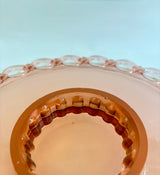
A Magnificent Centrepiece from the Depression Era
This spectacular large-scale cake plate showcases the artistry and optimism of American Depression glass at its finest. Produced by Lancaster Glass Company circa 1930s (later acquired by Anchor Hocking), this piece features the beloved "Old Colony" or "Lace Edge" pattern in a highly collectible pink hue. The intricate open-work rim and substantial footed base create a dramatic presentation worthy of your most celebrated occasions.
About This Piece
During the challenging years of the Great Depression, American glass companies created beautiful, affordable pressed glass to bring joy and elegance into everyday homes. Lancaster Glass Company's Old Colony pattern became one of the era's most beloved designs, distinguished by its delicate lace-like edge that required exceptional mould-making skill to produce.
This pink colourway is particularly sought after by collectors. The generous size—substantial enough to make a statement yet perfectly proportioned—makes it ideal for dramatic displays, celebration cakes, or as a sculptural accent piece. The heavy-footed base provides stability while elevating your presentation with vintage glamour.
Product Details
Maker: Lancaster Glass Company (later Anchor Hocking)
Era: Circa 1930s
Pattern: Old Colony (also known as Lace Edge)
Style: Art Deco / Depression Glass
Material: Pressed glass
Colour: Pink (highly collectible)
Features: Decorative open-work lace rim, heavy-footed pedestal base
Size: Large scale for dramatic presentation
Weight: 2272g (substantial and stable)
Condition
Excellent vintage condition considering age and use. Flea bites to base consistent with age and gentle use over nine decades. Mould lines visible as expected with pressed glass production. Minimal signs of use—a testament to careful stewardship. No chips, cracks, or restoration. Still perfectly usable for serving.
Care Instructions
Hand wash only with mild soap and warm water. Avoid harsh or abrasive cleaners and high heat. Not dishwasher safe. Dry immediately with a soft, lint-free cloth to prevent water spots and maintain the glass's brilliant clarity.
Perfect For
A show-stopping gift for Depression glass collectors or vintage enthusiasts. Perfect for presenting celebration cakes, cupcakes, pastries, or cheese at gatherings. The substantial size makes it ideal for dramatic fruit displays, stacked macarons, or as a stunning centrepiece filled with seasonal decorations. Equally beautiful displayed on a sideboard or in a china cabinet where the intricate lace edge and pink glass can be admired. Safe for food use and still wonderfully functional after nearly a century.
A rare and substantial piece that brings the romance of 1930s American glass-making and the enduring appeal of Depression glass collecting to contemporary entertaining.
Age of an Item
Antique: An item that is at least 100 years old.
Vintage: An item that is at least 20 years old but less than 100 years old and is representative of its era.
Retro: A newer item designed in the style of a past era. It is not from that era but is a modern homage to it.
Condition of an Item
Mint: As new, with no signs of wear.
Excellent Vintage Condition (EVC): Shows minimal signs of wear through use but is not perfect.
Very Good Vintage Condition (VGVC): Shows some signs of age and use but is still in good overall shape.
Good Vintage Condition (GVC): Shows clear signs of wear, use, and age.
Perfectly Imperfect: This is not an official term. We've adopted it for the purposes of The Timeless Edit because we believe damaged items still have value. Our definition of Perfectly Imperfect is if an item has visible damage but remains beautiful as a decorative piece or suitable for use in a different capacity from that for which it was originally designed.
Common Flaws found in Antique and Vintage Items
Crazing: Crazing is the existence of web of fine cracks that only occurs in the glaze layer of Fine Bone China and porcelain. It is a normal occurrence, particularly in older items.
- Clean Crazing: The cracks are clear, without any staining from food, moisture, or other contaminants. Clean crazing can be used as an intentional decorative design element.
- Stained Crazing: This occurs when food particles, bacteria, or other contaminants get into the cracks over time, causing them to darken and become visually conspicuous. Items with stained crazing are not recommended for use with food but are still great for use as a decorative piece or other practical function.
Flea Bite: A flea bite is a tiny, pin-sized chip or nick in the surface of an item. It is a common form of imperfection in older items, especially glass.
Bottom Wear: This is common in older items, especially glass, and is often an indication of age. Wear to the base of an item is caused by everyday use over time and includes scratches, scuffs, shallow chips, flakes, and flea bites.
Chip: chips are considered either shallow or deep. A shallow chip is typically inconspicuous. A deep chip is large enough to be immediately apparent.
Flake: a small and shallow chip which breaks the surface of an item.
Scratch: a mark which compromises the surface of an item, and which feels raised, rough or sharp to the touch. Not to be confused with Straw Marks and marks which can occur during the manufacturing process.
Hairline Crack. This is a narrow and tight break going through glaze and porcelain body and is visible from both sides of the item. It is not always immediately obvious and can be missed on first inspection. Generally, a hairline crack does not affect the integrity of the item.
Water Mark/Stain: patches, ridges, deposits and clouding on glass caused by water left standing in the vessel for a lengthy period. Such stains can’t be removed.
Air Bubbles: Air bubbles in hand-blown glass are a natural result of the traditional glassmaking process, where air becomes trapped in the molten glass during its creation. They are often seen as a sign of authenticity, indicating the item is handmade and unique, rather than a defect. While a small number of bubbles is generally acceptable, a high concentration of bubbles may indicate fragility. There are exceptions though. In some cases, air bubbles are an intentional decorative feature where artists have used specific Molds or techniques to control their appearance. Also, air bubbles are found in Depression Glass due to its mass production method, where the glass was quickly moulded with little concern for perfection. These bubbles are a common characteristic that signifies authentic pieces.
Maker’s Miss: This is an unintentional inclusion or air bubble in the item caused or overlooked by the glass blower or maker in the manufacturing process.
Firing Flaw: This is original flaw cased during the firing process. Examples include pinholes or blisters in the glaze, grit stuck to the glaze, stains caused by an impurity in the porcelain and shrinkage cracks that have opened during the drying or firing process. This is not considered damage.
Straw marks: These are marks on the external surface of glass that look like fine lines or even scratches. They occur when molten glass is cut with shears, and the resulting mark doesn't fully smooth out before the glass cools and sets. They are not considered damage but are instead a common characteristic of old, handmade, or machine-pressed glass. Unlike a scratch, straw marks feel smooth to the touch. Straw Marks are commonly found in Depression and Carnival Glass.
The Story of Anchor Hocking: American Glass with Timeless Appeal
Anchor Hocking holds an iconic place in American glassmaking history, creating beautiful, durable glassware that graced American homes for generations. Today, these pieces are treasured by collectors worldwide for their quality craftsmanship, distinctive designs, and the nostalgic connection they provide to mid-century American life.
A Legacy of American Manufacturing Excellence
Founded in 1905 in Lancaster, Ohio, Anchor Hocking Glass Company became one of America's most successful and beloved glass manufacturers. For over a century, the company produced an extraordinary range of glassware – from elegant Depression glass and Fire-King to practical kitchenware and decorative pieces – all crafted with the quality and innovation that made American glass renowned worldwide.
Throughout the 1930s to 1970s, Anchor Hocking's golden era, the company brought beauty and functionality to American households during both challenging and prosperous times. Their pieces weren't expensive crystal reserved for special occasions – they were beautiful, affordable glass that families could use daily, bringing colour, style, and durability to everyday life.
What Made Anchor Hocking Distinctive
Depression Glass Heritage: During the 1930s, Anchor Hocking produced some of America's most beloved Depression glass patterns. These colourful, affordable pieces brought brightness to homes during difficult economic times, proving that beauty could be accessible to everyone.
Fire-King Innovation: Anchor Hocking's Fire-King line, introduced in the 1940s, revolutionized kitchenware with heat-resistant glass that could go from oven to table. The distinctive jadeite green, turquoise blue, and other colours became icons of mid-century American kitchens.
Quality & Durability: Anchor Hocking glass was built to last. Their pieces could withstand daily use, temperature changes, and the demands of busy households, which is why so many have survived in excellent condition decades later.
Distinctive Colours & Patterns: From the soft pink and green of Depression glass to the vibrant jadeite and turquoise of Fire-King, from elegant clear pressed patterns to cheerful decorated pieces, Anchor Hocking's colour palette and design variety offered something for every taste.
American Design Identity: Anchor Hocking pieces embody mid-century American optimism and practicality. Their designs balanced functionality with style, creating glassware that was both useful and beautiful.
Why Anchor Hocking is Collectible Today
Decades after many lines were discontinued, Anchor Hocking glass has experienced remarkable appreciation among collectors and vintage enthusiasts. Here's what makes these pieces so sought-after:
Mid-Century Nostalgia: Anchor Hocking glass evokes powerful memories of grandmothers' kitchens, family dinners, and simpler times. These pieces represent American domestic life across generations, carrying stories and connections that transcend their material value.
Fire-King Phenomenon: Fire-King jadeite has become one of the most collectible categories of American vintage glass. The distinctive green colour and retro appeal have made these pieces highly sought-after, with rare items commanding significant prices.
Depression Glass Appeal: Anchor Hocking's Depression glass patterns – including "Mayfair," "Princess," and "Royal Ruby" – are prized by collectors for their beauty, historical significance, and the optimism they represented during challenging times.
Quality That Endures: The durability that made Anchor Hocking practical for daily use means many pieces have survived in excellent condition. Well-preserved examples showcase the quality of American manufacturing at its peak.
Design Versatility: Anchor Hocking pieces work beautifully in contemporary interiors. A jadeite mixing bowl or a Royal Ruby vase adds authentic vintage character and a pop of colour to modern spaces.
Accessible Collecting: While rare pieces command premium prices, Anchor Hocking remains relatively accessible. New collectors can build meaningful collections that celebrate American design history without prohibitive investment.
Sustainable Luxury: Collecting vintage Anchor Hocking aligns with circular-economy values. Each piece represents American craftsmanship and manufacturing heritage given new life, a conscious choice to cherish what already exists rather than consume new resources.
Identifying Authentic Anchor Hocking
Anchor Hocking pieces are typically marked with moulded or stamped marks on the base. Common marks include "Anchor Hocking," "AH," the anchor-over-H logo, or "Fire-King" for that specific line. Some pieces include pattern names or numbers. Earlier Depression glass pieces may be unmarked but can be identified by distinctive patterns and colours. The quality of moulding, weight, and characteristic colours (particularly the jadeite green and Royal Ruby red) are reliable indicators of authenticity.
Notable Patterns & Lines
Anchor Hocking's most collectible lines include Fire-King jadeite restaurant ware, turquoise blue pieces, and decorated patterns like "Wheat" and "Philbe." Depression glass patterns such as "Mayfair" (pink and blue), "Princess" (green and pink), "Royal Ruby" (deep red), and "Forest Green" are highly sought-after. The "Bubble" pattern in various colours, "Moonstone" with its opalescent hobnail design, and "Wexford" pressed glass are also popular with collectors.
Caring for Your Anchor Hocking Glass
These American treasures deserve thoughtful care. While Fire-King was designed for oven use, vintage pieces should be hand washed with warm water and mild detergent to preserve their condition. Avoid harsh chemicals, abrasive scrubbers, or extreme temperature changes. Handle carefully, particularly pieces with delicate edges or handles. Display away from direct sunlight to prevent colour fading, especially with pink and green Depression glass. Store with care, using soft padding between pieces. With proper care, your Anchor Hocking glass will continue its journey through homes for generations to come.
At The Timeless Edit, we celebrate Anchor Hocking glass as part of our commitment to circular luxury – honouring American craftsmanship, design heritage, and giving beautiful vintage pieces a cherished second chapter in homes that will treasure them.


